A Time Machine for the Anthropocene
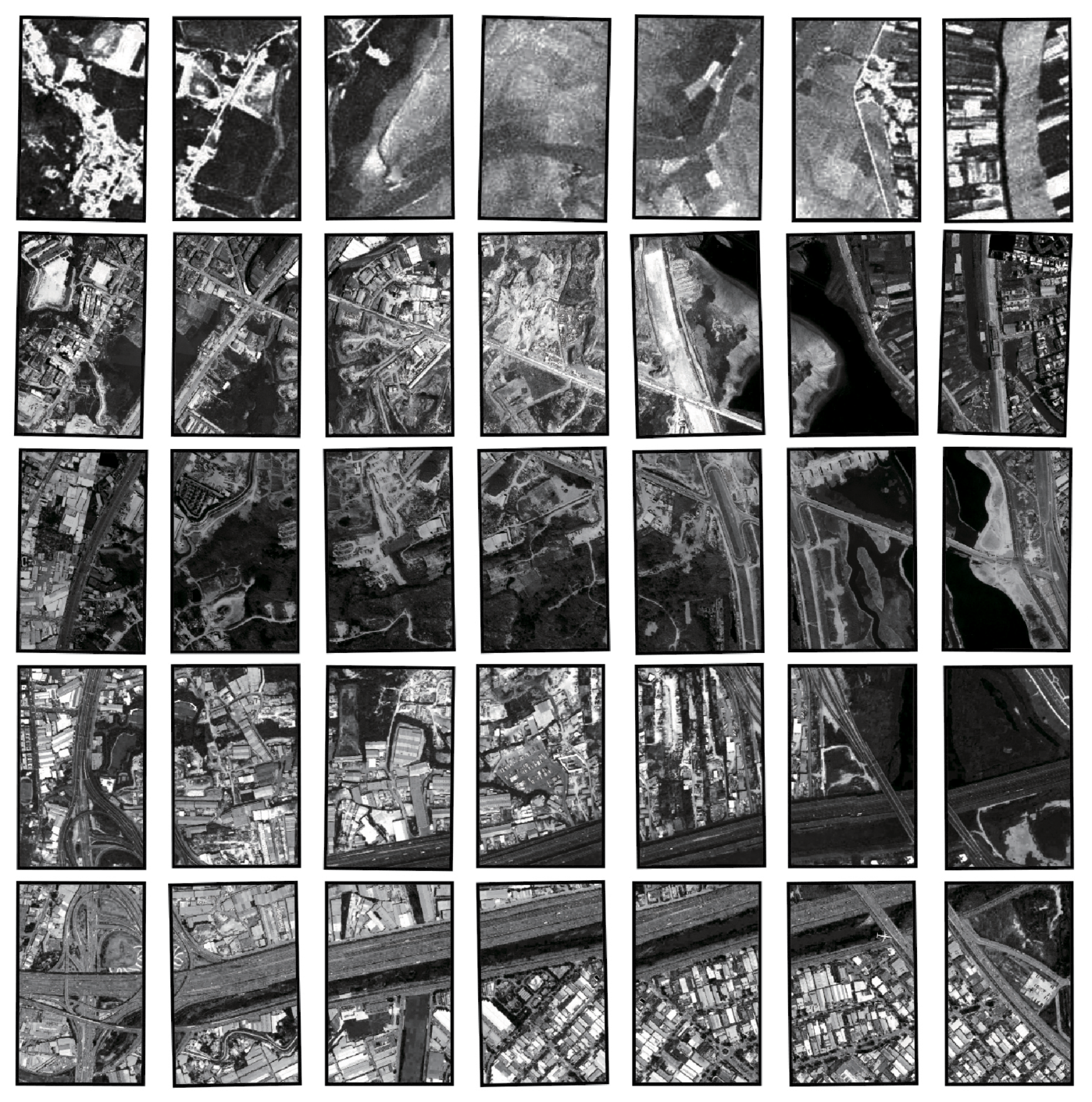
How Can Urban Infrastructure Adapt to a Changing Environment?
In the face of dual challenges from extreme climate and urbanization, contemporary cities are confronting the critical issues of environmental resilience and infrastructure transformation. The Wugu Mountain landfill, as a site bearing the historical imprint of post-war industrialization, not only reflects the environmental impact of human activities and also reveals the crucial role of urban infrastructure in both disaster and daily contexts.
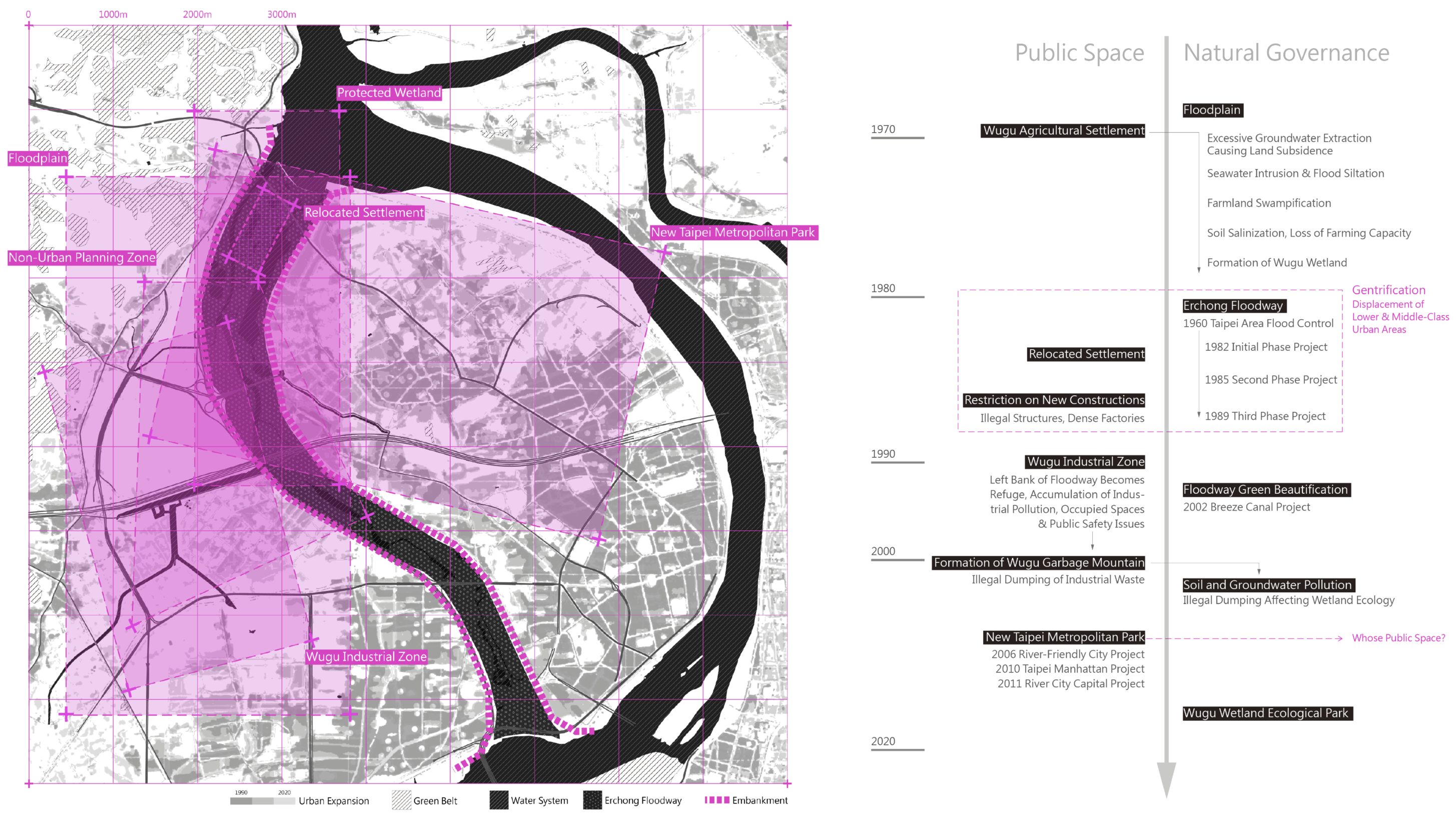
Landscape Genealogy:
Emerging Territory
Over the past six decades, social and natural meanings have been projected, layered, and evolved in this place—through agricultural settlements, industrial zones, flood disasters and mitigation infrastructure.
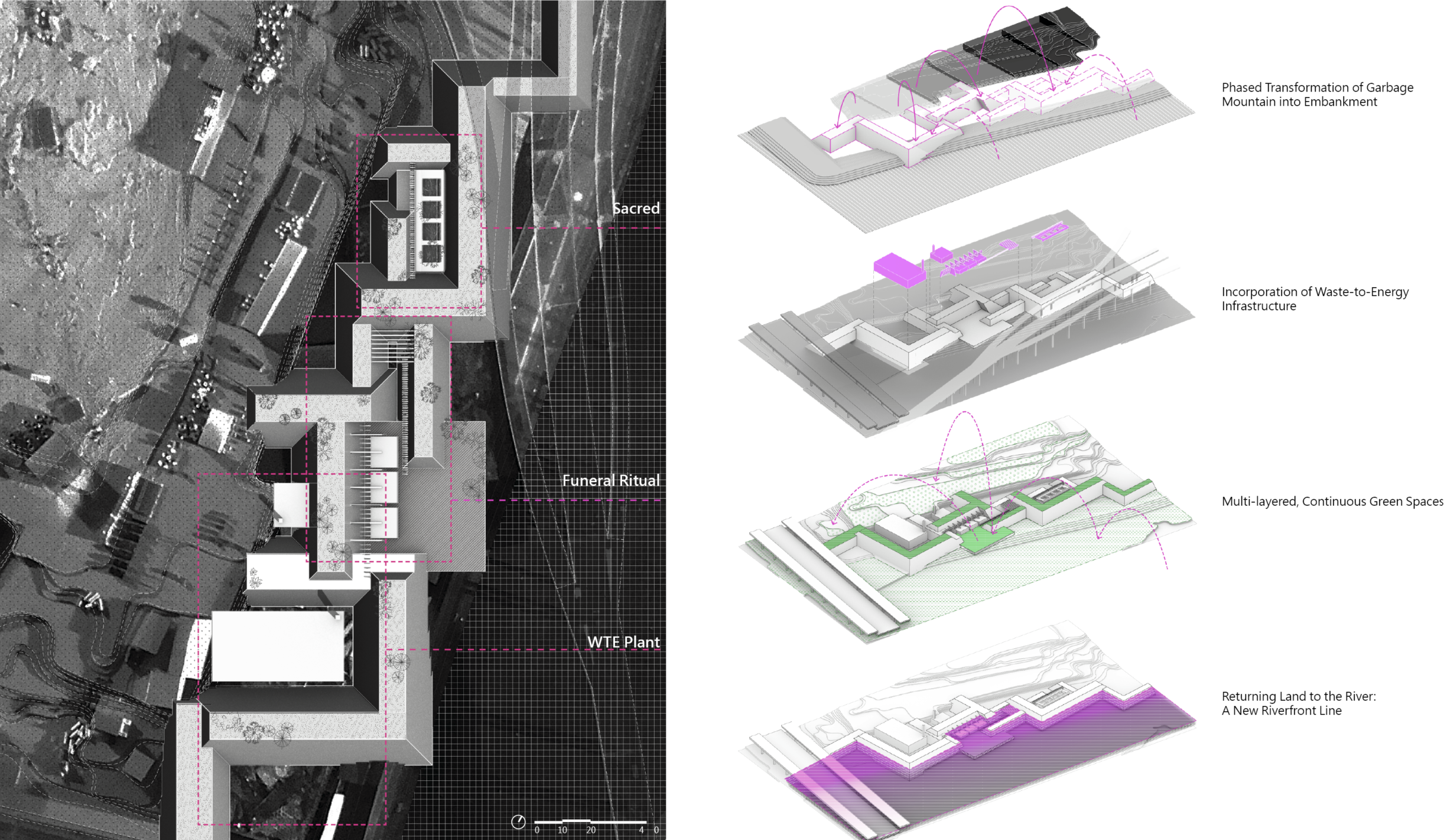
Political Geography: The Accumulating Anthropocene Strata
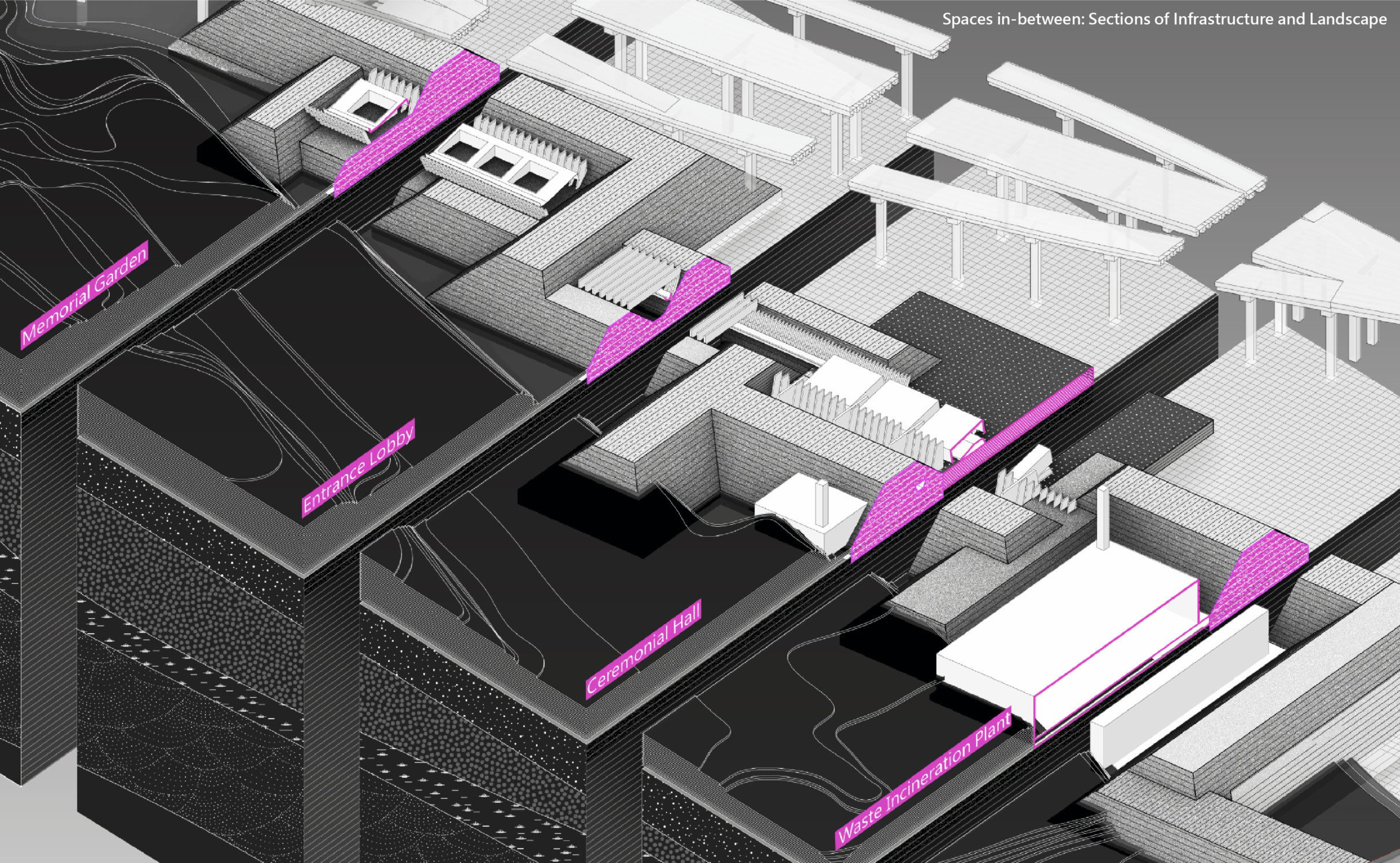
Each phase of existence is inscribed within the landscape. In the geographic cross-section, archaeological evidence layers from new to old: the Wugu Garbage Mountain formed by industrial waste, concrete bridges, embankment foundations, salt-affected soil from seawater intrusion, and organic-rich soil deposited on the floodplain. These material traces also reflect the rise and fall of social territories.
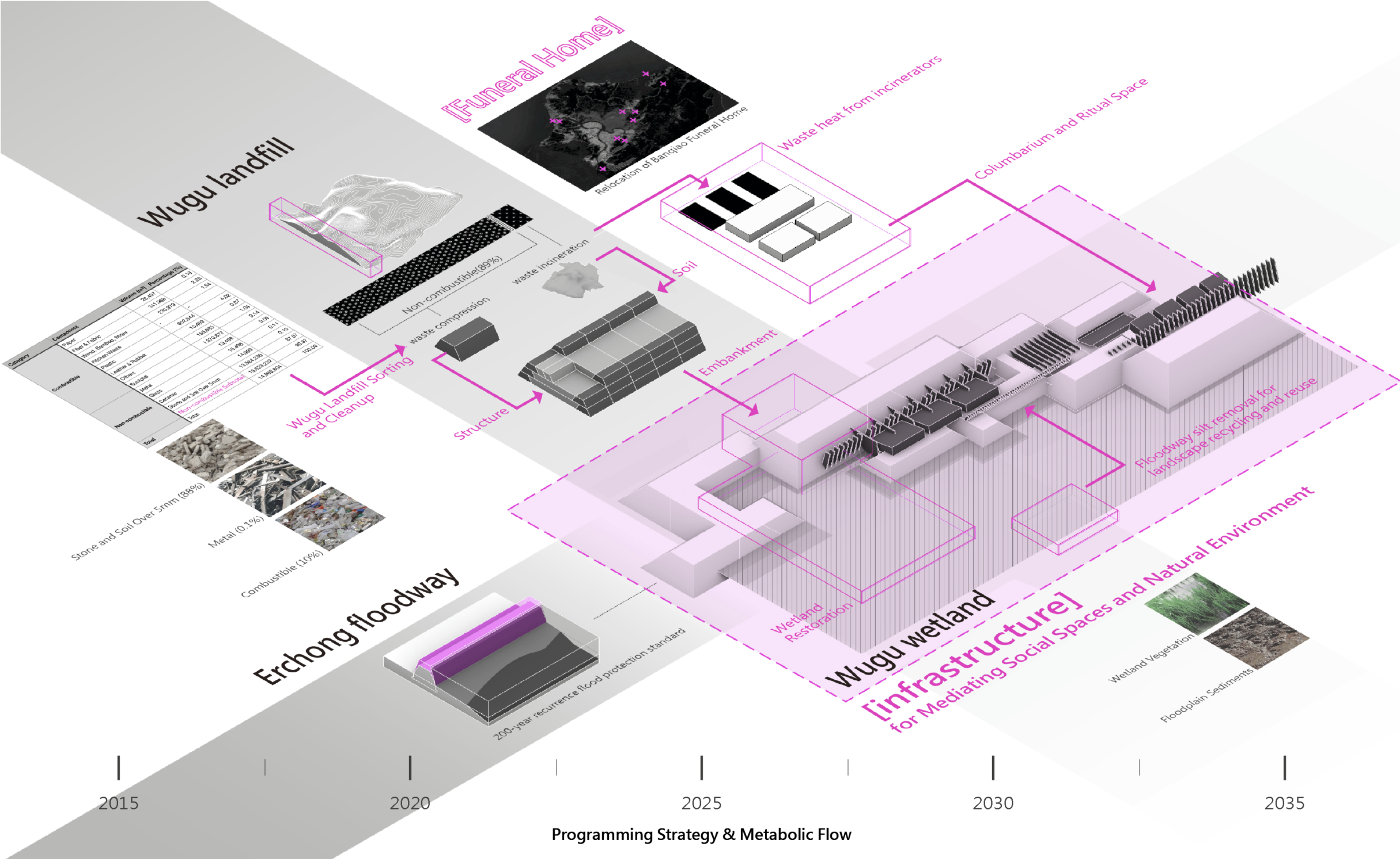
Infrastructure for the Future: From Landfill to Ecological Riverfront
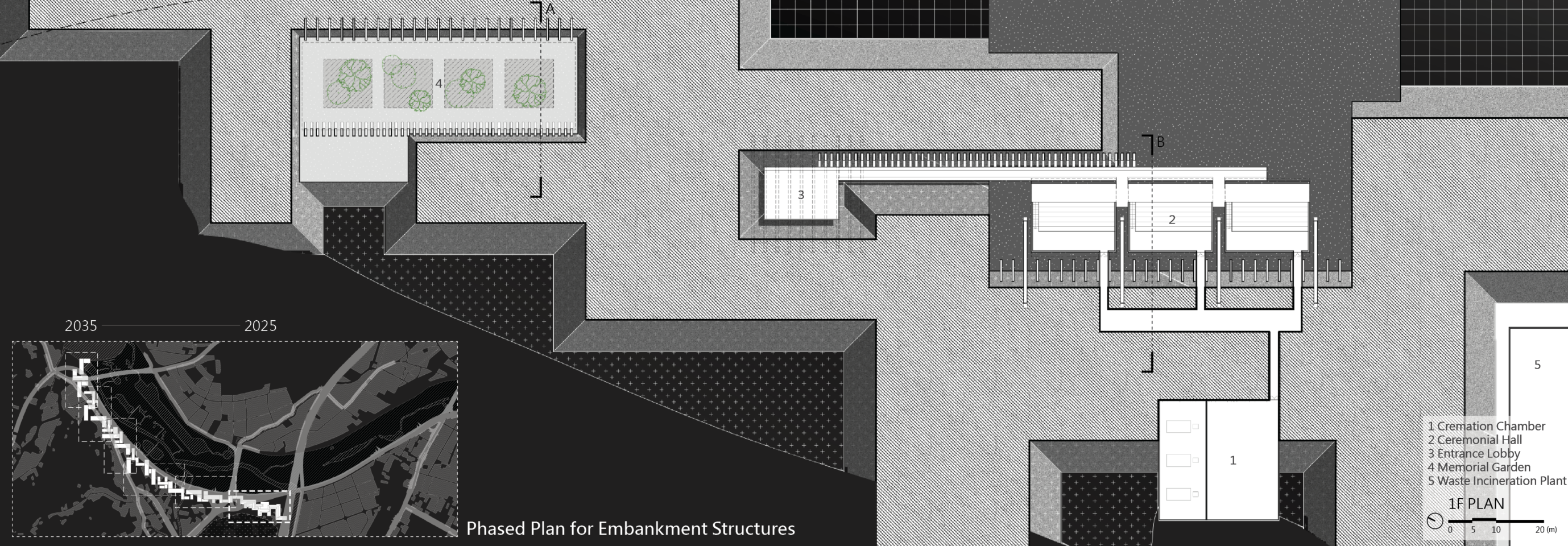
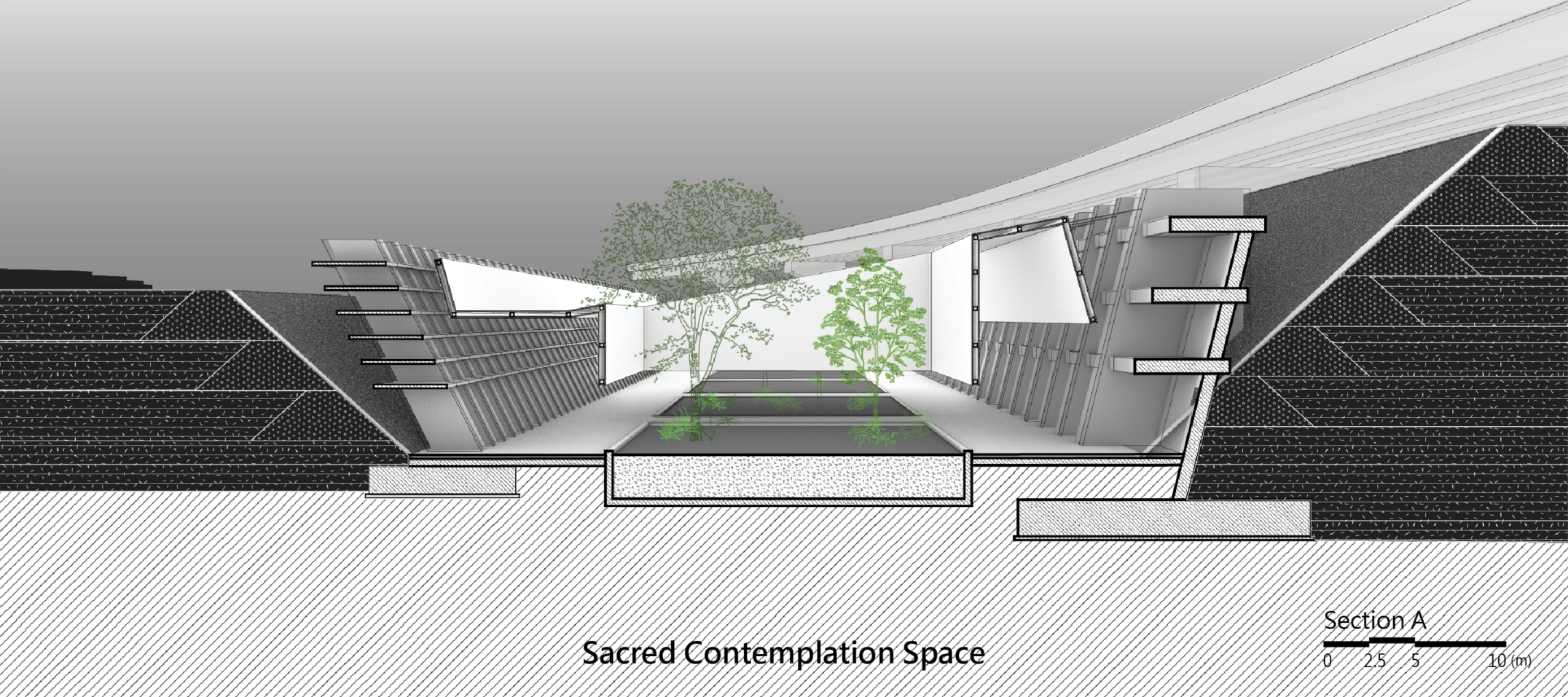
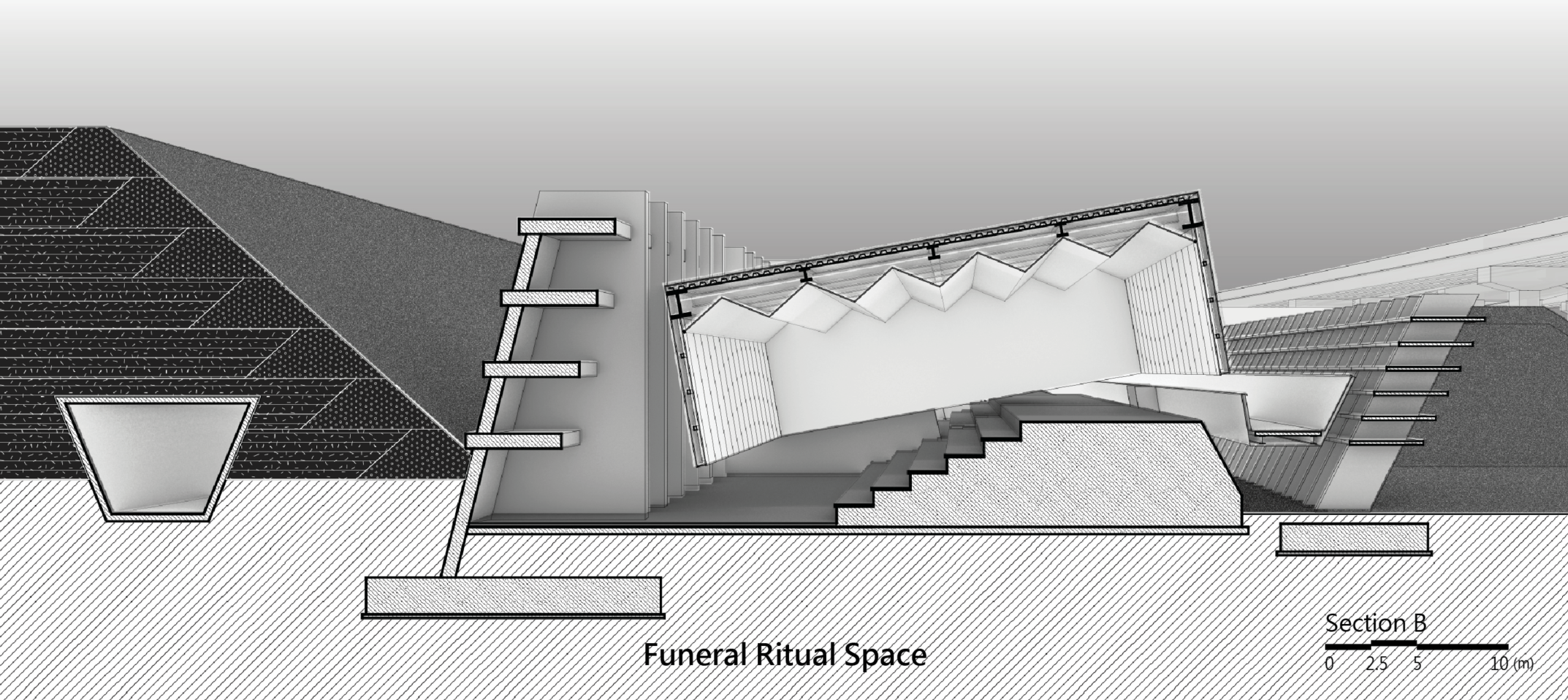
Facing the dual crises of waste pollution and rising water levels, this project proposes a transformative approach to convert hazards into public-benefit landscapes. In the short term, the landfill will be dismantled in phases, with waste repurposed for embankments and waste-to-energy facilities harnessing residual heat. Over time, multifunctional levees and green landscapes will reshape the site into a resilient, ecologically restored riverfront.